
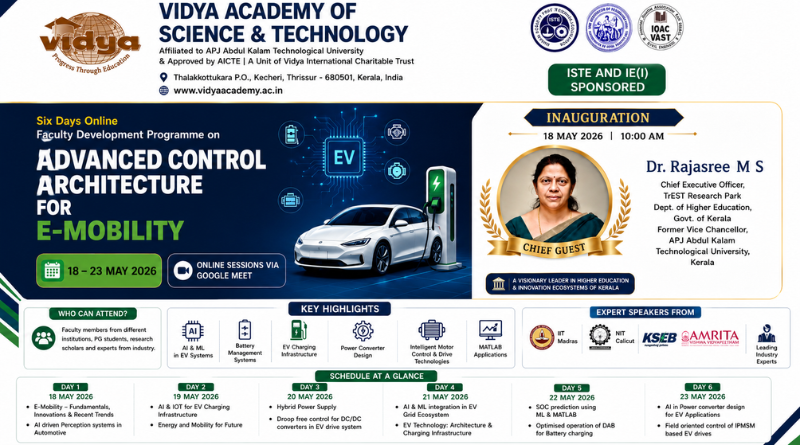
EEE Department conducts six-day FDP on “Advanced Control Architecture for E-Mobility
|
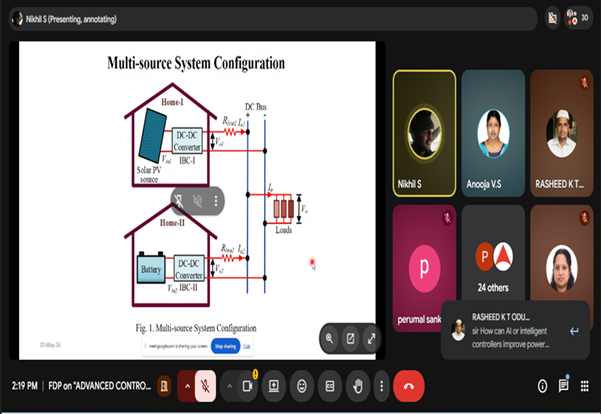
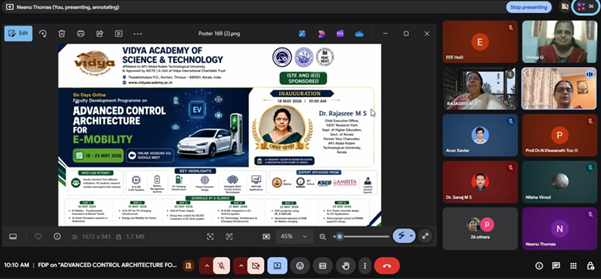
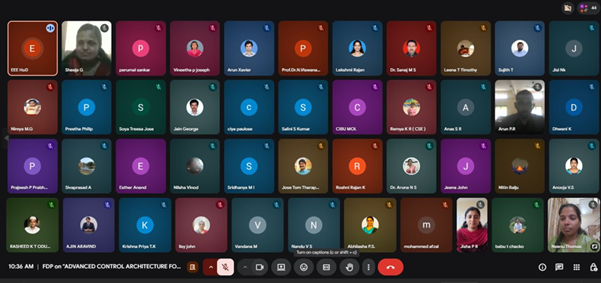
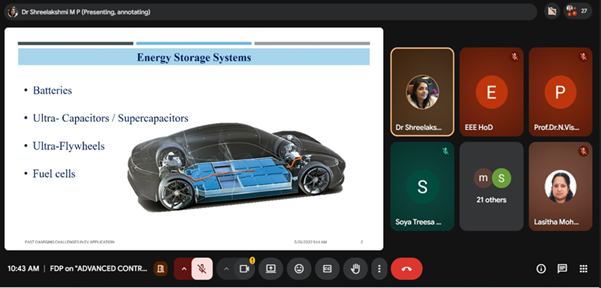
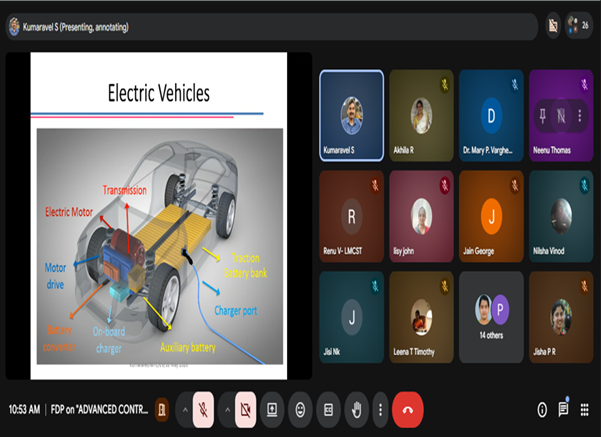
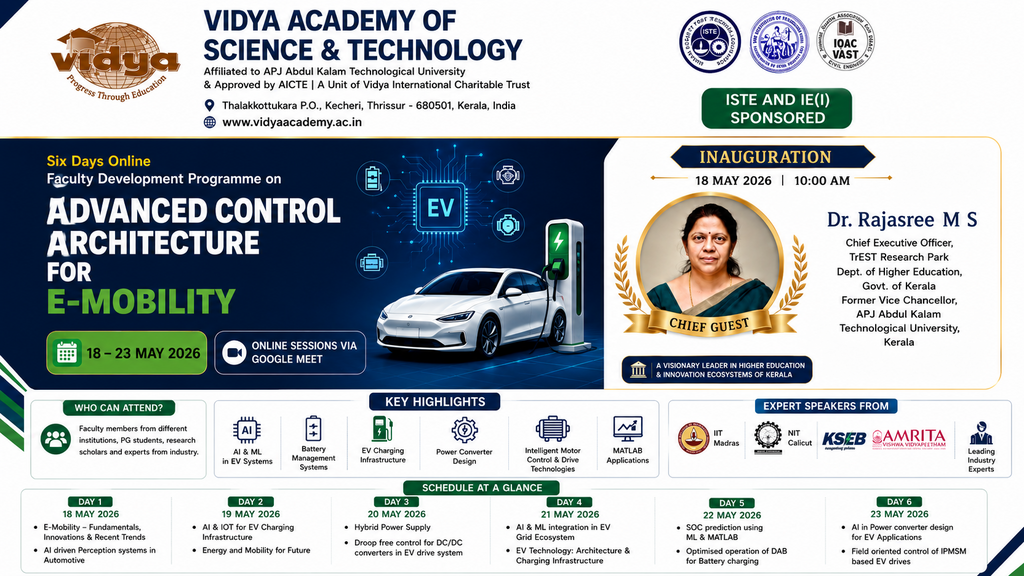
With an aim to enhance the knowledge and skills of faculty members in advanced control architectures used in e-mobility systems, and to provide exposure to the latest developments,the Department of Electrical and Electronics Engineering (EEE) in association with Internal Quality Assurance Cell (IQAC), successfully organized a six-day ISTE and IE-sponsored Faculty Development Programme (FDP) on “Advanced Control Architecture for E-Mobility” during 18-23 May 2026. The FDP was designed to equip faculty members with comprehensive theoretical knowledge and practical insights into advanced control architectures employed in modern electric vehicles (EVs). The programme focused on key areas such as motor control strategies, battery management systems, energy optimization techniques, intelligent control methodologies, and emerging trends in EV technology. It also aimed to strengthen participants’ ability to effectively deliver the KTU 2024 Scheme course Electric Vehicles (PEET522) while bridging academic concepts with real-world EV applications. The inaugural function was held on 18 May 2026. Dr Mary P Varghese (HoD, EEE Dept) welcomed the gathering.Dr Sunitha C (Principal) presided over the function, and Ms. Sheeja G (Asst Prof, EEE Dept) introduced the chief guest, Dr. Rajasree M. S. (CEO – Trest Research Park, Thiruvananthapuram). Inaugurating the programme, Dr. Rajasree highlighted the growing significance of e-mobility in addressing climate change and ensuring energy security. She also discussed challenges faced by EV startups, particularly in battery management, fast charging, and grid stability. The inaugural session concluded with a vote of thanks delivered by Ms. Neenu Thomas (Asst Prof -Seln. Grade,CSE Dept, FDP Coordinator). The technical sessions featured eminent academicians and industry experts from premier institutions and organizations across India. The sessions covered a wide spectrum of topics, including EV fundamentals, recent innovations and research trends, advanced driver assistance systems (ADAS), AI applications in mobility, charging infrastructure development, vehicle-to-grid (V2G) technologies, battery technologies, hybrid power sources, power electronic converters, energy management, load forecasting, state-of-charge estimation techniques, optimization algorithms, and intelligent control architectures for electric vehicles. |
| The Editorial Team of News & Events joins the entire Vidya fraternity in extending hearty appreciations to Dr Mary, Ms. Neenu on and the entire EEE Dept on the successful conduct of FDP that provides participants with valuable insights into modern e-mobility control systems, promoted academic and research excellence and strengthened their technical competencies in the field of electric mobility !!! |